
How Wagyu Is Graded: Marble Scores and the MIJ Record
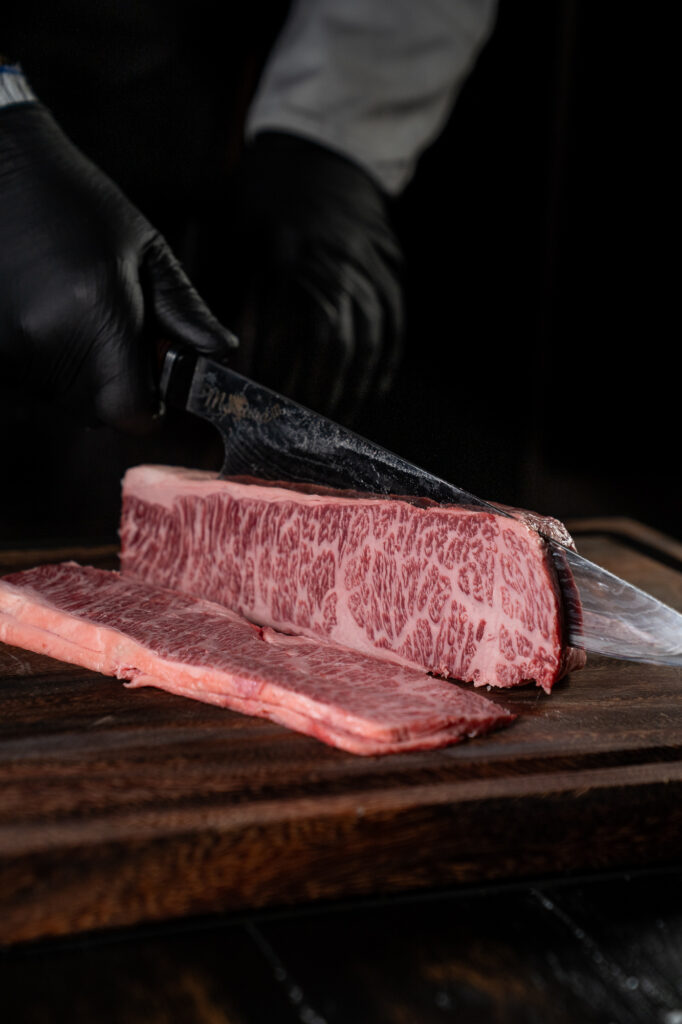
Marbling — the fine web of intramuscular fat that gives Wagyu its appearance and its melt-in-the-mouth texture — is the single most-scrutinised quality in premium beef. But how is it actually measured, and what do the numbers on a Mayura label really mean?
The Australian scale
In Australia, marbling is assessed against the AUS-MEAT Marble Score (MS) scale. Mayura’s Full-Blood cattle consistently achieve high scores — typically 7 to 9+ — a band broadly equivalent to the high-end Japanese A4–A5 grades. Just as important as the height of the score is its consistency: because every animal is raised on identical protocols, you are not receiving a Marble Score 9 in one shipment and a 6 in the next.
Beyond Marble Score 9 — the MIJ camera
Every Mayura carcass is graded independently by an AUS-MEAT accredited grader. To sharpen that assessment, a second tool is used: digital-camera image assessment with Meat Image Japan (MIJ). The images are analysed with AI and machine learning to read marbling beyond AUS-MEAT Marble Score 9 — where the traditional scale runs out. Mayura holds the Australian record for the highest MIJ Marble Score, at 22.5.
The three labels
Mayura’s marble scores map onto three tiers, so a grading number translates directly into what arrives on the plate:
- Gold Label — Marble Score 5–7. Robust, unapologetically beefy; the introduction to the range.
- Platinum Label — Marble Score 8–9. Marbling multiplied and evenly spread; a self-basting, redefined tenderness.
- Signature Series — Marble Score 9+. The ultimate expression of Full-Blood Wagyu: extreme marbling, silky texture, the “wow factor” made tangible.
More from Insights
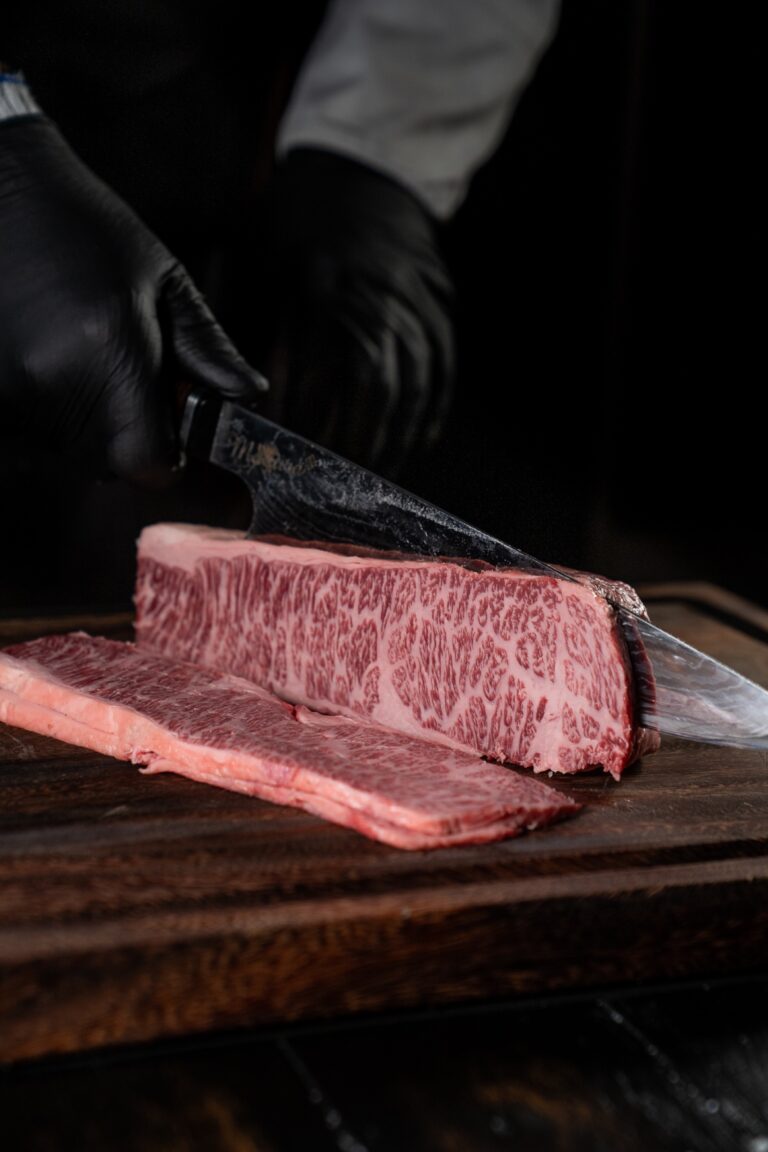
What Makes Wagyu Special: Marbling Explained
Marbling is the intramuscular fat that gives Wagyu its signature look and buttery texture — but genetics alone don’t guarantee it. What marbling really is, and…
Read more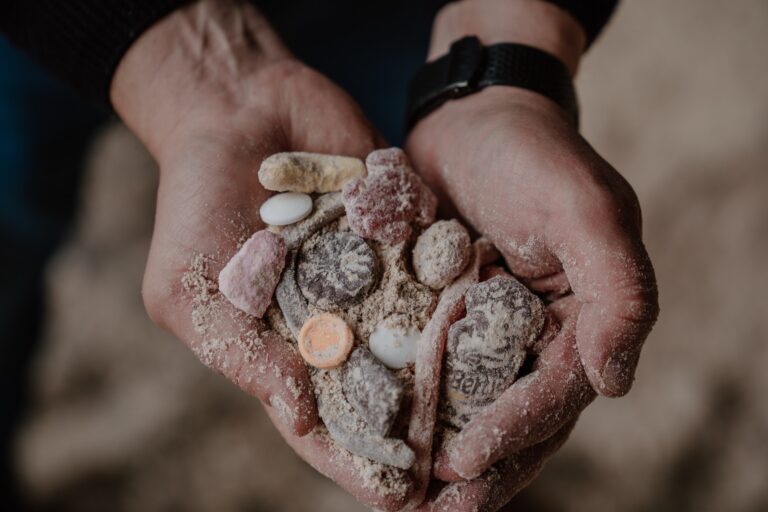
Inside the Mayura Feeding Programme
From limestone-hill grazing cells to the "Moo Cow Motel" and a signature chocolate-supplemented diet — how Mayura feeds its Full-Blood Wagyu across roughly 500 days on…
Read more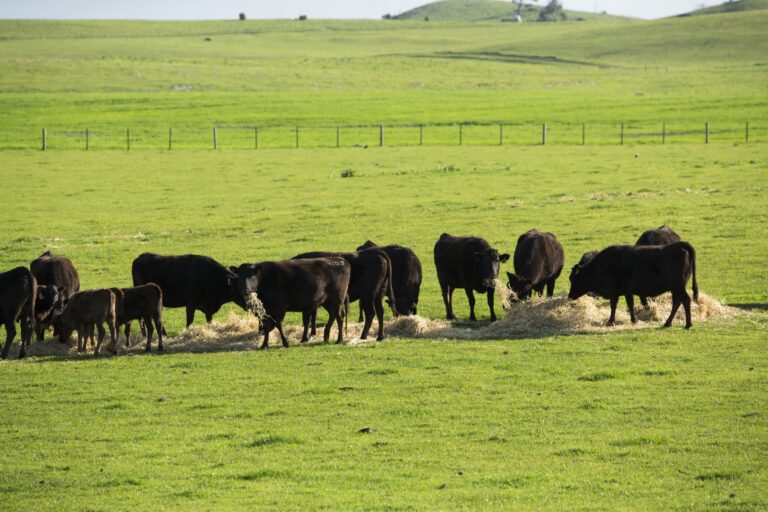
Full-Blood vs Crossbred Wagyu: Why the Difference Matters
Much of the Wagyu on menus worldwide is crossbred. Mayura raises only Full-Blood — 100% genetically pure Wagyu, traceable to Japanese bloodlines. Why that distinction is…
Read more